Get free quotes from land surveying services near you
Takes about a minute. Free, no obligation; providers reply to you directly.
Three years ago, I hired a freelance surveyor for what I thought was a straightforward boundary survey on a 2-acre commercial parcel. The guy showed up alone, spent four hours on-site, and delivered a basic map. Six months later, when we went to refinance, the title company flagged the survey as incomplete—no deed research, no monument ties, no legal filing. Turns out, that £450-per-day rate I’d celebrated as a bargain came with a cost I didn’t anticipate: I had to hire someone again to do the work properly.
That’s when I learned the difference between a cheap survey and a complete one. And more importantly, between when a freelancer makes sense and when you actually need an agency.
The Short Version:Hire a freelancer for well-defined, non-urgent residential boundary surveys where the scope is tight and communication is direct. Hire an agency for complex projects, legal disputes, commercial ALTA work, or anything with a hard deadline where you need institutional backup if something goes wrong.
Key Takeaways
- Freelancers cost 30-50% less upfront, but agencies provide team backup and built-in accountability for complex or legally binding projects.
- Professional licensing (PLS) matters more than solo vs. firm—verify it either way; cheap rates don’t exempt surveyors from legal filing requirements.
- Match the project type to the hiring model: simple residential boundary work suits freelancers; ALTA/NSPS surveys and multi-property development needs agencies.
- The real trade-off isn’t price—it’s reliability and risk. Freelancers go unavailable. Agencies split focus across competing clients.
The Honest Pricing Reality
Here’s what nobody tells you: a boundary survey isn’t actually cheap, whether you hire a freelancer or an agency.
A basic boundary survey—just one property line, minimal research—runs around $400. But that’s the rare exception, and it usually means “I’ll walk the property, mark corners, and give you a sketch.” The moment you need deed research, monument ties, corner markers (rebar and caps), legal filing, and a deliverable that holds up in court, you’re looking at $2,000 or more. This is true whether you hire solo or through a firm.
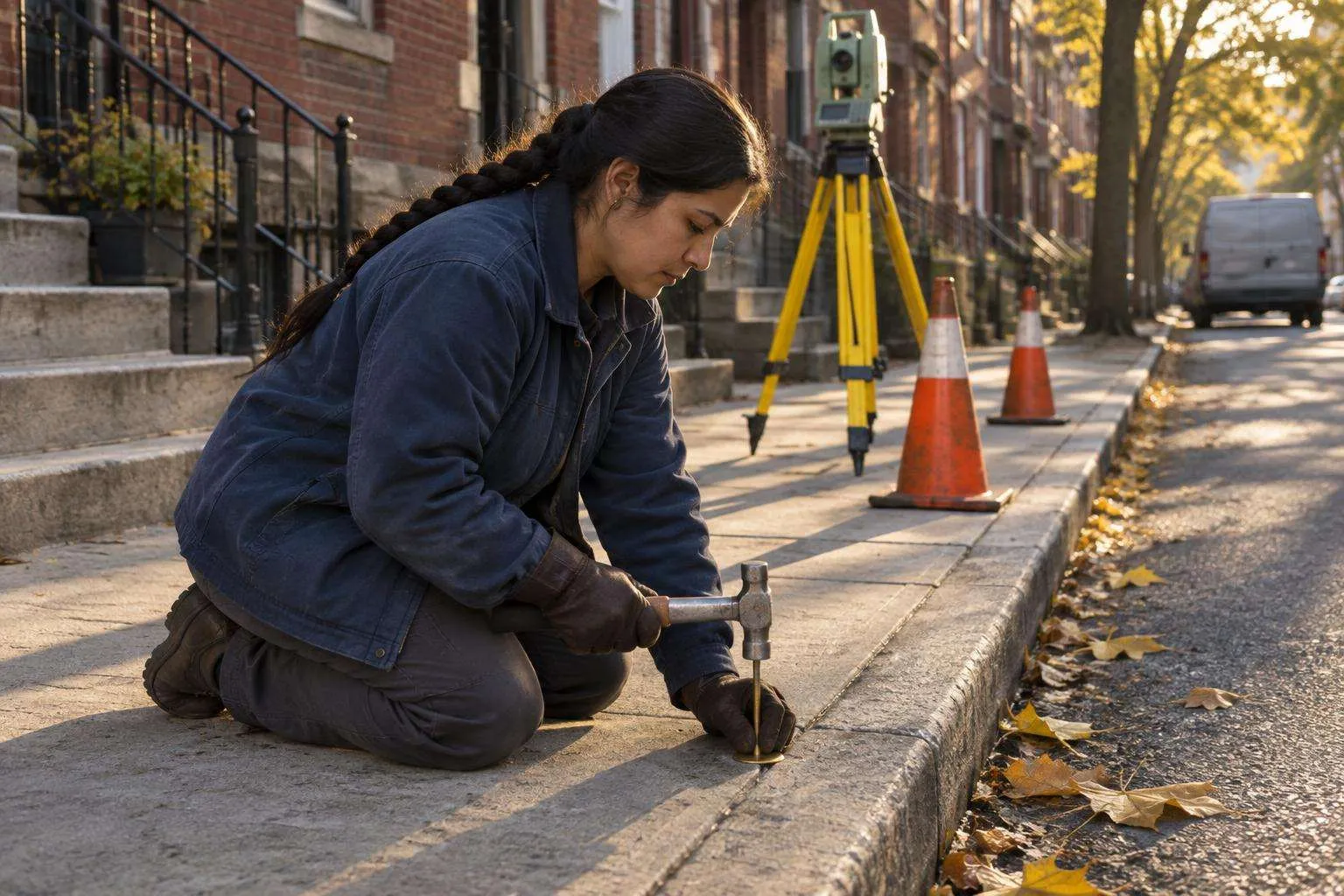
Why? Because licensing laws in every U.S. state require surveyors to file records with the government, conduct deed research, and locate property monuments—regardless of project size. Those aren’t optional add-ons; they’re professional and legal obligations. A Licensed Professional Surveyor (PLS) can’t cut corners without losing their license.
Where freelancers win on cost: No organizational overhead. Experienced offshore hydrographic surveyors charge £450–£500 per day as independent contractors, versus £50,000+ annual salaries for full-time surveying staff. That savings sometimes passes to you. Senior-level specialists can charge up to £2,000 per day—but even at that rate, they’re trading direct client relationships and project control for higher hourly rates.
Where agencies charge more: You’re paying for team depth, backup resources, insurance, and someone else’s management overhead. If a freelancer gets sick or double-books, that’s your problem. If an agency surveyor is unavailable, there’s a bench.
Pro Tip:Don’t assume lower rates mean lower quality. Instead, verify the surveyor is licensed (PLS), ask exactly what’s included in the quote, confirm they’ll provide a survey copy and specify corner markers (rebar/cap/concrete monument), and check if they’ll file the record with the government. Same questions, either path.
Freelancer vs. Agency: Side-by-Side
| Factor | Freelancer | Agency |
|---|---|---|
| Cost | 30–50% cheaper; per-project or hourly pricing | Higher due to overhead; bundled team rates |
| Timeline | Slower for large/complex projects (one person) | Faster; multiple surveyors, equipment, crews |
| Communication | Direct with the surveyor; personal, aligned on vision | Through a project manager; structured but less intimate |
| Availability | Risk of unavailability (illness, other clients, emergencies) | Stable team backup; continuity guaranteed |
| Best For | Small, well-defined residential boundary surveys; non-urgent work | Complex ALTA/NSPS surveys, commercial development, disputes, hard deadlines |
| Workload Consistency | Unpredictable (feast/famine cycles reported by quantity surveyors in parallel fields) | Steady work across multiple clients; less financial volatility |
| Risk/Liability | Same PLS liability as an agency—cheap doesn’t reduce legal exposure | Institutional accountability; multiple reviewers before sign-off |
| Management Overhead | You coordinate directly; simple but you own all project management | Minimal for you; agency handles internal workflows |
The trap many professionals fall into: assuming a lower price means lower risk. It doesn’t. A freelancer signing a survey carries the same legal liability as a firm. If that boundary is wrong, both are equally liable. What changes is redundancy—an agency typically has a senior surveyor review the work before it’s sealed. A solo freelancer doesn’t.
When Freelancers Make Sense
Use a freelancer when:
- The scope is tight and non-urgent. Residential boundary survey, property line clarification, initial site assessment before a larger project—freelancers excel here.
- You can communicate directly. You know what you want, the surveyor understands it, and there are no competing interpretations. No middleman needed.
- Budget is the primary constraint. You’re doing this for cash flow, not time, and you can absorb a slower timeline.
- The work is specialized but standalone. A topographic survey for your own planning; a construction staking job on a single phase. In and out.
Reality Check:Freelancers report workload fluctuations that impact financial stability. Translation: they may deprioritize your job if a bigger client calls. Vet via licensing, references, and a clear written scope. Ask how long they’ll be available for follow-up if issues arise post-delivery.
When Agencies Become Worth the Premium
Use an agency when:
- The project is complex or commercial. ALTA/NSPS surveys for financing, development platting, boundary disputes with legal proceedings. Agencies have done this 500 times.
- Timeline is tight. One surveyor can’t cover three properties in five days. An agency deploys a crew.
- You need continuity and backup. If your surveyor quits mid-project, the agency covers it. If a freelancer does, you start over.
- Institutional accountability matters. Real estate attorneys, title companies, and lenders often prefer agency work because there’s a paper trail, multiple reviewers, and professional indemnity insurance.
- You don’t want to manage a solo operator. Agencies handle scheduling, quality review, and follow-ups. You just approve the work.
The Non-Negotiable: Professional Licensing
Here’s what matters more than solo vs. firm: Is the surveyor licensed?
Every state licenses surveyors independently. Verify that anyone you hire holds a current PLS (Professional Land Surveyor) license in your state. This is non-negotiable for any survey that’ll be filed, financed, or used in a dispute.
Licensing is the only thing that keeps a surveyor honest—and it applies equally to freelancers and agencies. A cheap freelancer and a big-name firm carry the same legal obligation. The difference is that the firm has more to lose if corners are cut.
Practical Bottom Line
Here’s your decision tree:
- Define the project scope. Boundary survey? ALTA? Topographic? Development work?
- Set your constraints. Budget-first? Timeline-first? Risk-averse?
- Verify licensing. PLS status, in your state, current and clean record.
- Ask what’s included. Deed research? Monument ties? Legal filing? Corner markers? Deliverable copy?
- Get it in writing. Scope, cost, timeline, deliverables—all on paper before work begins.
For most small commercial projects, you’ll find freelancers are faster to onboard and cheaper to deploy. For anything complex, financed, or contested, an agency’s overhead is worth the security of a team.
And here’s the thing nobody says out loud: the best surveyors—freelance or agency—are booked. If someone’s available tomorrow and the price seems too good, ask yourself why. Sometimes it’s because they’re new and hungry. Sometimes it’s because they cut corners.
Next Steps
Start by understanding what type of survey you actually need. Not sure? Check out our Complete Guide to Land Surveyors for a breakdown of survey types and when each applies to your situation.
Then verify licensing at your state board, collect three quotes (mix of freelancers and firms), and compare scope—not just price. You’ll find the real answer pretty quickly.
Your future self (and your title company) will thank you.
Done reading? Get quotes from land surveyors near you.
Takes about a minute. Free, no obligation; providers reply to you directly.
Popular cities: