Get free quotes from land surveying services near you
Takes about a minute. Free, no obligation; providers reply to you directly.
You’re standing in your new house for the first time, and your real estate attorney drops a bomb: “We need a survey before closing.” You nod like you know what that means. You don’t. Two weeks later, you’re staring at a bill for $1,200 and a plat map that looks like someone drew your property with a protractor while having a seizure.
Welcome to the world of land surveying — the profession nobody thinks about until they desperately need it.
Here’s what most people miss: a land surveyor isn’t just some person with a clipboard who paces off your yard. They’re a licensed professional who translates centuries of property law, deed language, and boundary disputes into a single document that determines what you actually own. Get it wrong, and you could inherit someone else’s legal nightmare for decades.
I’m going to walk you through what surveyors actually do, how to hire one without getting fleeced, what the different survey types mean, and why some properties cost $500 to survey and others run you $5,000+.
The Short Version:Hire a licensed surveyor when buying property, dividing land, or starting construction. Costs range from ~$500 for basic residential work to $5,000+ for complex commercial projects. A boundary survey is the standard. ALTA surveys cost more but protect lenders and title companies. Always verify licensing and insurance before signing anything.
Key Takeaways
- Land surveyors are licensed professionals (regulated state-by-state) who map property boundaries, measure elevations, and identify legal issues like encroachments and easements.
- Survey costs depend on property size, complexity, location, and the type of survey — a mortgage survey runs $500–$1,500; an ALTA survey $1,500–$5,000+.
- The main survey types are boundary (most common), topographic, ALTA/NSPS (required by lenders), construction staking, and cadastral surveys.
- Poor surveys lead to boundary disputes, construction delays, title insurance problems, and legal liability — hiring a licensed pro is non-negotiable.
- Regulatory requirements vary by state, but every surveyor must sign and seal their final plat, making them personally liable for accuracy.
What a Land Surveyor Actually Does (And Why It Matters)
Let me be direct: surveying is detective work disguised as geometry.
A surveyor’s job isn’t to tell you what you own — it’s to figure out what the law says you own, then prove it with measurements and documents. That distinction matters.
Here’s the standard workflow:
1. Historical Research Before touching a measuring tape, they dig through deeds, prior surveys, plat maps, and public records. They’re looking for any document that describes your property’s boundaries, easements, rights-of-way, or liens. This isn’t optional. If they skip it, they’re guessing.
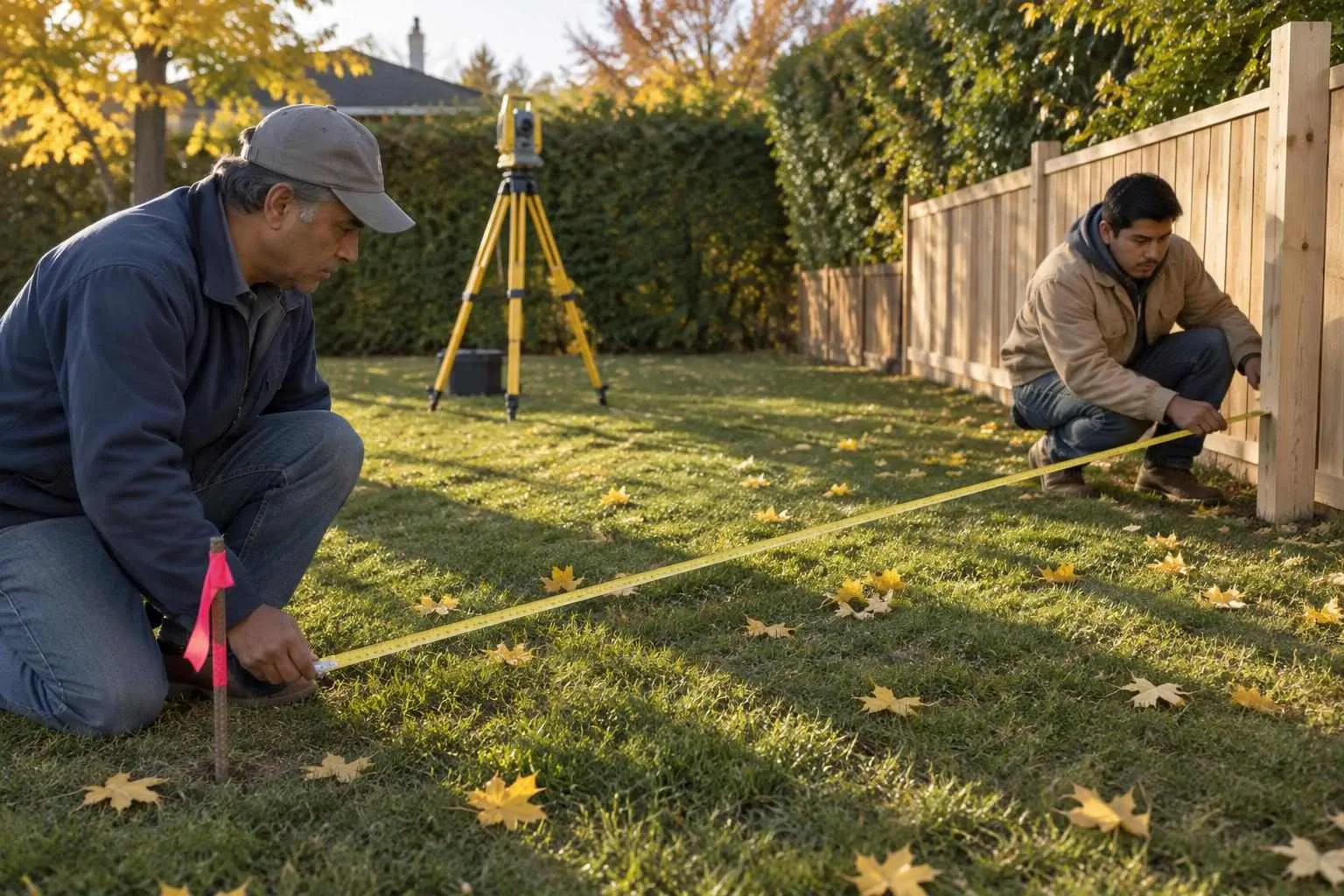
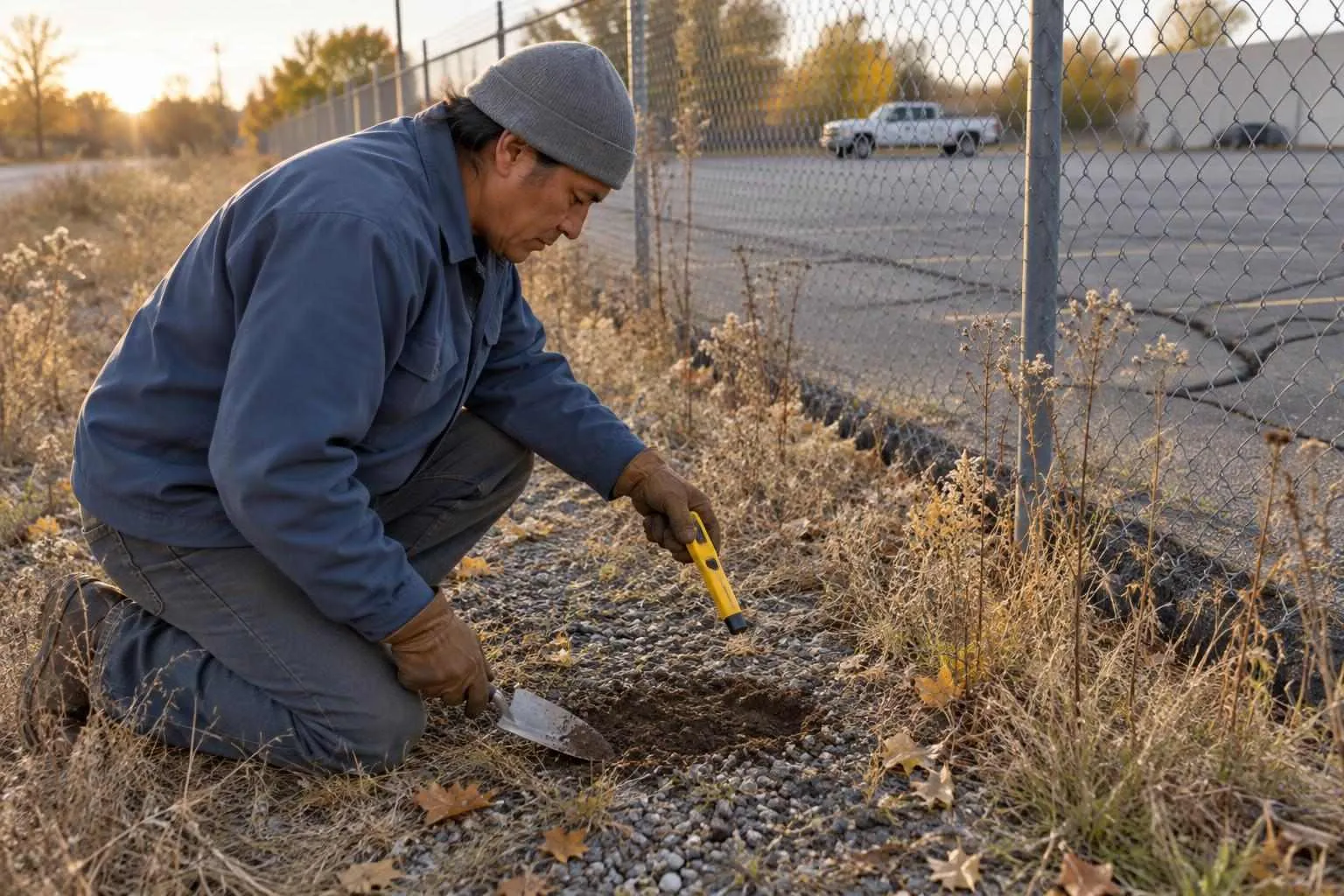
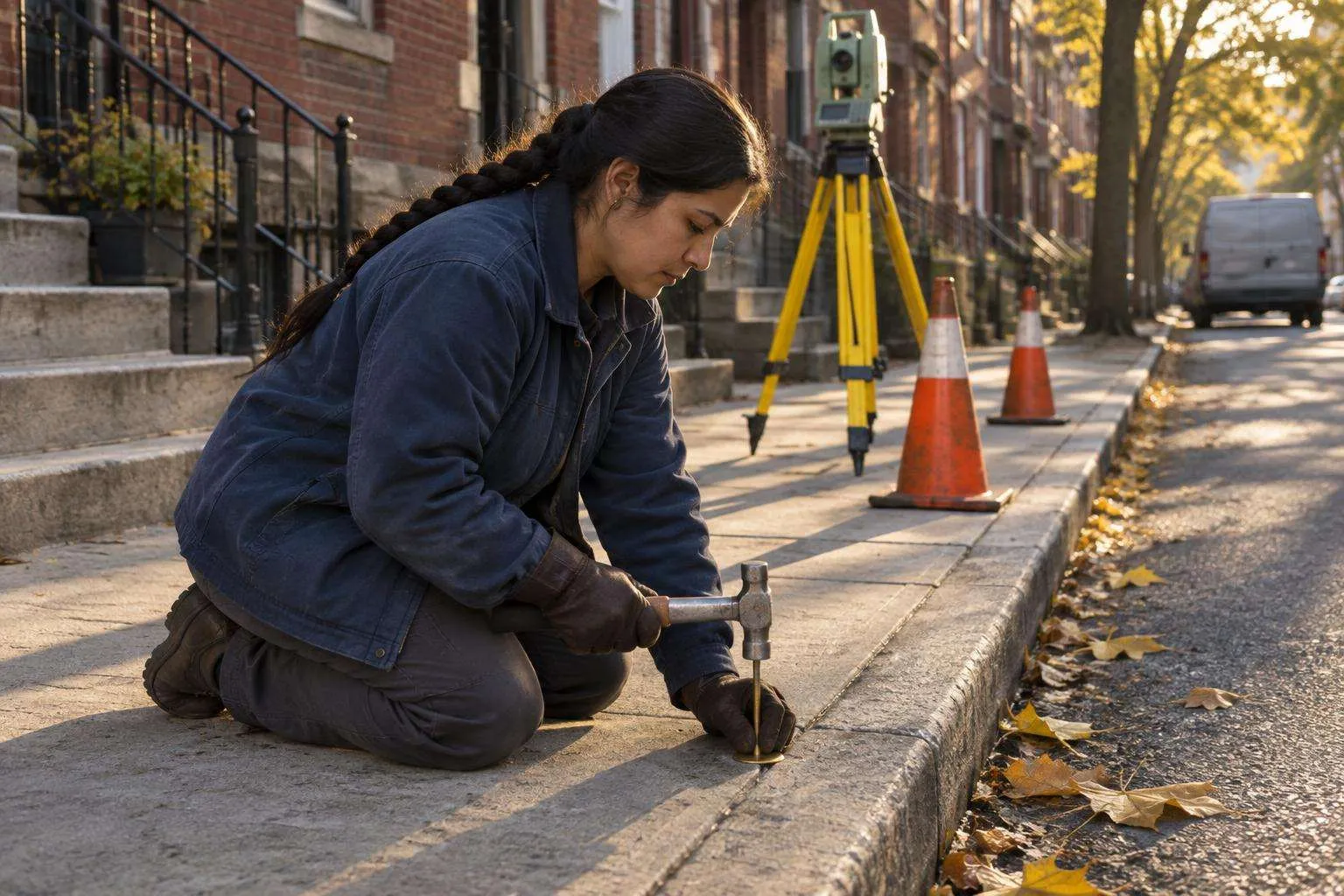
2. Fieldwork Using tools like total stations (basically a super-accurate laser rangefinder), GPS receivers, and good old-fashioned tape measures, they physically measure your property. They’re looking for property corners, monuments (buried markers), fence lines, and any structures that might sit on or cross the boundary.
3. Data Analysis They reconcile what the documents say with what the ground shows. Spoiler: they often don’t match. A fence built three feet inside the property line. A garage that technically overlaps into an easement. A neighbor’s tree hanging over your land. This is where the survey gets interesting — and expensive.
4. Final Report The deliverable is a plat map (the visual) plus a written legal description. It includes the surveyor’s stamp and signature, which means they’re personally liable for errors. This matters because it means something.
Reality Check:If your surveyor finds an encroachment during the survey, you’ve got time to negotiate or address it before closing. If you discover it after closing, you own the problem. This alone justifies the cost.
The Survey Types: What’s the Difference, and When Do You Need Each?
Here’s where most people get lost. There are a half-dozen survey types, and the industry doesn’t make it obvious which one you actually need.
| Survey Type | What It Shows | Best For | Price Range |
|---|---|---|---|
| Boundary Survey | Property lines, corners, monuments, fences, structures | Residential transactions, property disputes, clearing titles | $500–$1,500 |
| Mortgage/Location Survey | Improvements (house, garage, shed) on the property | Home buying, refinancing | $400–$1,200 |
| ALTA/NSPS Survey | Everything in boundary + easements, encroachments, zoning, title issues, utilities | Commercial lending, title insurance, investor protection | $1,500–$5,000+ |
| Topographic Survey | Elevations, contours, natural features, drainage patterns | Site planning, building additions, landscaping, engineering | $800–$3,000 |
| Construction Staking | Stakes out building footprints, setback lines, grades | Building, roads, infrastructure projects | $500–$2,000 |
| Cadastral Survey | Establishes legal boundaries from historical documents | Land division, ownership clarity, government lands | $1,000–$3,000+ |
Here’s the insider move: If a lender is involved, they’ll tell you exactly what survey they need. Most of the time, it’s either a mortgage survey or an ALTA survey. The mortgage survey is cheaper and faster. The ALTA survey costs more but protects everyone — which is why commercial lenders, title companies, and institutional buyers demand it.
Pro Tip:Ask your title company or lender what survey type they require before calling a surveyor. You might not need the most expensive option. But if you’re buying investment property or working with a commercial lender, budget for ALTA. It’s worth it.
Why Survey Costs Vary (A Lot)
You’ve probably seen quotes ranging from $400 to $5,000+ for what sounds like the same job. Here’s why.
Property Size: A quarter-acre suburban lot takes less time than five acres of rural land with unclear boundaries.
Complexity: If your deed describes the boundary using old surveying methods (like “from the big oak tree”) or if prior surveys contradict each other, the surveyor spends more time in research and fieldwork reconciling the mess.
Location: Urban properties with clear plat records cost less than rural properties where the original survey might be 60 years old and references a road that no longer exists.
Survey Type: A mortgage survey is a simplified boundary survey. An ALTA survey includes utility locations, easement research, zoning verification, and environmental issue flags. It’s more work, so it costs more.
Fieldwork Tools and Accuracy: A surveyor using GPS and a total station provides more precision than one using older methods. Higher accuracy = higher cost.
Access Issues: If the property is hard to reach, on steep terrain, or surrounded by obstacles, fieldwork takes longer.
Timeline: Need it in 48 hours? Most surveyors will charge a rush fee.
Nobody tells you this: always get a quote in writing that specifies what’s included. A $600 quote might not include utility research; a $1,500 quote might. The number means nothing without context.
Licensing, Regulation, and Why It Matters
Here’s where things get serious. Land surveying is one of the few professions where each state maintains its own licensing board, and every surveyor must sign and seal their work.
The Basics:
- Every U.S. state regulates land surveyors separately (no federal consistency).
- To get licensed, surveyors must typically complete a degree, pass a state exam, and log 4+ years of work experience under a licensed surveyor.
- Once licensed, they carry a professional seal — a stamp that goes on every deliverable. If something’s wrong, that stamp makes them personally liable.
- Some states require continuing education; others don’t. Requirements vary wildly.
Why This Matters to You: When you hire a surveyor, you’re hiring someone the state has verified is competent and trustworthy. That liability matters. If a surveyor’s work is later found to be inaccurate, they can be sued, lose their license, or face criminal charges for fraud.
Before you hire, verify:
- License status via your state’s licensing board (usually available online).
- Professional liability insurance (essential; ask for proof).
- Whether they carry errors and omissions coverage.
Reality Check:A surveyor without errors and omissions insurance is a red flag. If their work causes a problem, you have no recourse. Don’t hire them.
The Equipment Behind the Accuracy
Modern surveyors use tools that would look like science fiction 20 years ago:
Total Stations: These are laser rangefinders + angle measurers in one device. Point it at a target, and it tells you distance and direction with sub-inch accuracy.
GPS/GNSS Receivers: Used for larger properties or when total stations don’t work (dense forest, underground areas). Accuracy ranges from a few feet down to sub-inch, depending on the equipment.
Drones: Increasingly used for topographic surveys and large properties. They’re faster and cheaper than traditional fieldwork for certain applications.
Survey-Grade Software: The data flows into software that calculates coordinates, generates plat maps, and links everything to historical records.
The cost of this equipment is one reason survey prices are what they are. A quality total station runs $20,000–$50,000. Professional-grade GPS can exceed $10,000. Software subscriptions add up. This is a capital-intensive business, and those costs get passed along.
Hiring a Surveyor: The Practical Process
1. Start With Your Lender or Title Company They’ll often recommend a surveyor or specify survey requirements. Use this as your baseline.
2. Get Multiple Quotes Call at least three licensed surveyors in your area. Provide the same information to each: property address, deed, survey type needed, timeline.
3. Verify Credentials
- Check their state license.
- Ask for proof of insurance.
- Ask for references from recent clients.
- Check online reviews, but take them with a grain of salt (surveys are rarely “fun,” so negative reviews might just reflect disappointment with the cost, not the quality).
4. Clarify Scope in Writing Make sure the quote specifies:
- What the survey includes (e.g., utilities, easements, zoning).
- Timeline for delivery.
- Cost and payment terms.
- What happens if they find issues (encroachments, easements, etc.).
5. Don’t Choose Based on Price Alone A surveyor $200 cheaper than the next option isn’t a bargain if they rush the work or skip research. You’re paying for accuracy and liability protection. Choose based on reputation and thoroughness, not the lowest bid.
Common Surprises: What Surveys Often Uncover
Here’s what people don’t expect until they get the results:
Encroachments: A neighbor’s fence, driveway, or structure sits partially on your property (or vice versa). Now you know before buying, and you can negotiate.
Easements: A utility company has the legal right to dig on your land, or someone has a right-of-way through it. This affects what you can build.
Zoning Violations: Your house sits partially in a setback area or violates zoning restrictions. If you plan renovations, this becomes a problem.
Title Defects: The deed might describe boundaries that don’t match current plat maps, or prior surveys contradict each other. The surveyor flags these for your attorney.
Hazardous Issues: While not technically part of the survey, a thorough professional might note visible signs of underground storage tanks, contaminated soil, or other environmental red flags.
Pro Tip:If your surveyor finds problems, don’t panic — you’ve just avoided discovering them after closing. Use the survey as a negotiation tool with the seller.
Current Industry Trends and What’s Changing
The surveying profession is quietly modernizing:
Drone Technology: Faster topographic surveys, lower costs for large properties, better data for site planning.
3D Modeling: Surveyors are increasingly delivering 3D point clouds and digital models, not just 2D plats.
Automation: Data processing software is getting smarter, reducing time in the office and lowering costs for routine surveys.
Specialization: More surveyors are focusing on niche areas like renewable energy site surveys, flood risk assessments, or construction staking rather than general practice.
Licensing Mobility: Some states are working toward reciprocal licensing, making it easier for out-of-state surveyors to work across borders. This could increase competition and lower costs over time.
For you, this means surveys are generally getting faster and cheaper — but only if you hire someone using modern tools. An old-school surveyor with a tape measure and a transit will cost more and take longer.
State Regulations: What You Need to Know
Here’s the annoying part: there’s no national standard. Every state sets its own rules.
Common Requirements:
- Bachelor’s degree in surveying or related field (most states).
- 4+ years of work experience under a licensed surveyor.
- Pass the FS (Fundamentals of Surveying) exam and the PLS (Professional Land Surveyor) exam.
- Maintain errors and omissions insurance.
The Differences:
- Some states require continuing education; others don’t.
- Some recognize reciprocal licensing from other states; most don’t.
- Some allow non-licensed people to perform certain survey tasks; others restrict everything to licensed professionals.
- Seal and signature requirements vary.
Why This Matters: If you’re hiring a surveyor from out of state, verify they’re licensed in your state, not just their home state. A California PLS can’t legally perform survey work in New York without a New York license.
Check your state’s professional licensing board website for specific requirements and to verify credentials.
Practical Bottom Line
Here’s what you actually need to do:
Before you buy property:
- Ask your lender or title company what survey type they require.
- Get a quote from at least two licensed surveyors.
- Verify their license and insurance in writing.
- Budget $500–$2,000 for residential work; $1,500–$5,000+ for commercial or complex projects.
When you receive the survey:
- Review it carefully for encroachments, easements, or zoning issues.
- Have your attorney review it before closing.
- Don’t waive the survey contingency in your purchase agreement.
If problems are found:
- Use them as a negotiation point with the seller.
- Have your attorney advise on the risk.
- Don’t close until you understand the implications.
For construction or land division:
- Hire a surveyor early in the planning process, not as an afterthought.
- Budget for both the survey and any title issues it uncovers.
- Use staking surveys to prevent costly construction mistakes.
What Comes Next
This guide covers the fundamentals, but surveying gets deep depending on your situation.
- If you’re buying a home, check out our guide on mortgage surveys and title insurance.
- If you’re developing property, you’ll want to understand construction staking and site planning.
- If you’re in a boundary dispute, our article on resolving property line conflicts walks through the legal process.
The core truth: a good survey costs money, but it prevents much more expensive problems later. Skip it, and you’re gambling with your property.
Hire a licensed professional. Verify their credentials. Get it in writing. Then you’ll actually know what you own.
Done reading? Get quotes from land surveyors near you.
Takes about a minute. Free, no obligation; providers reply to you directly.
Popular cities: