Get free quotes from land surveying services near you
Takes about a minute. Free, no obligation; providers reply to you directly.
I watched a homeowner spend $800 on a survey only to have their title company reject it three months later. The person who did the work? Technically a “surveyor” — they had the equipment, the GPS unit, the software. What they didn’t have was a license. When the boundary line hit a legal gray area, there was nobody with the authority to sign off on it, and the whole deal stalled.
That conversation stuck with me, and I realized most people don’t understand the difference between a land surveyor and a licensed land surveyor. The titles sound interchangeable. They’re not. And the gap between them can cost you thousands, kill a real estate deal, or leave you legally exposed.
The Short Version:If your survey touches property boundaries, legal descriptions, or any real estate transaction, you need a Licensed Land Surveyor. Period. Unlicensed surveyors can collect data, but only an LLS can certify it, sign it, and make it legally defensible. You’re not paying extra for a credential — you’re buying legal protection.
Key Takeaways
- Not all surveyors are created equal. Licensed Land Surveyors (LLS) have legal authority; unlicensed “surveyors” are support staff and cannot sign documents or make binding boundary determinations.
- Licensure requires 6+ years of credentialed experience plus passing four rigorous exams — it’s not a weekend certification.
- You almost always need a Licensed Land Surveyor for anything touching property boundaries, legal documents, or real estate transactions.
- Unlicensed assistants handle fieldwork under LLS supervision, which reduces costs but doesn’t replace the professional judgment phase.
Here’s What the Industry Doesn’t Want You to Know
The surveying field has a credibility problem. You can call yourself a “surveyor” in the eyes of Google. You can own surveying software. You can run a GPS unit into the field and collect boundary data. But here’s the rub: none of that makes you a surveyor in the legal sense.
A Licensed Land Surveyor is a regulated professional — think lawyer or engineer. In California, it takes 6 years of full-time equivalent experience, plus at least one year each of responsible field and office training, and you have to pass four separate exams, including the Fundamentals of Surveying (FS), Principles and Practice of Surveying (PS), California Professional Land Surveyor state law exam, and the state-specific Professional Land Surveyor exam.
Across the U.S., the credential varies by state: P.S. (Professional Surveyor), L.S. (Licensed Surveyor), P.L.S. (Professional Land Surveyor), R.L.S. (Registered Land Surveyor), R.P.L.S. (Registered Professional Land Surveyor), or P.S.M. (Professional Surveyor and Mapper). In Canada, it’s C.L.S. (Canada Land Surveyor).
The unlicensed person collecting data in the field? That’s an assistant or technician. They’re valuable. They’re not the licensed surveyor.
What Each Role Actually Does
The difference isn’t semantic. It’s legal.
| Role | Legal Authority | What They Actually Do | Your Risk If It Goes Wrong |
|---|---|---|---|
| Licensed Land Surveyor (LLS) | Independent; full authority | Analyze evidence, determine boundaries, certify/seal surveys, sign legal documents, ensure regulatory compliance, prepare legal descriptions, defend findings in court | None — LLS bears the liability |
| Unlicensed/Assistant Surveyor | Supervised only; supportive role | Fieldwork, data collection, equipment operation, preliminary measurements, data entry | High — LLS review is your only protection; inaccurate data wastes everyone’s time |
Licensed Land Surveyors can:
- Make binding property boundary determinations
- Sign and seal surveys (a notarized stamp that says “I staked my professional reputation on this”)
- Prepare ALTA/NSPS title surveys for transactions
- Testify as expert witnesses in boundary disputes
- Analyze conflicting evidence and make judgment calls
- Ensure the work meets state law and industry standards
Unlicensed surveyors can:
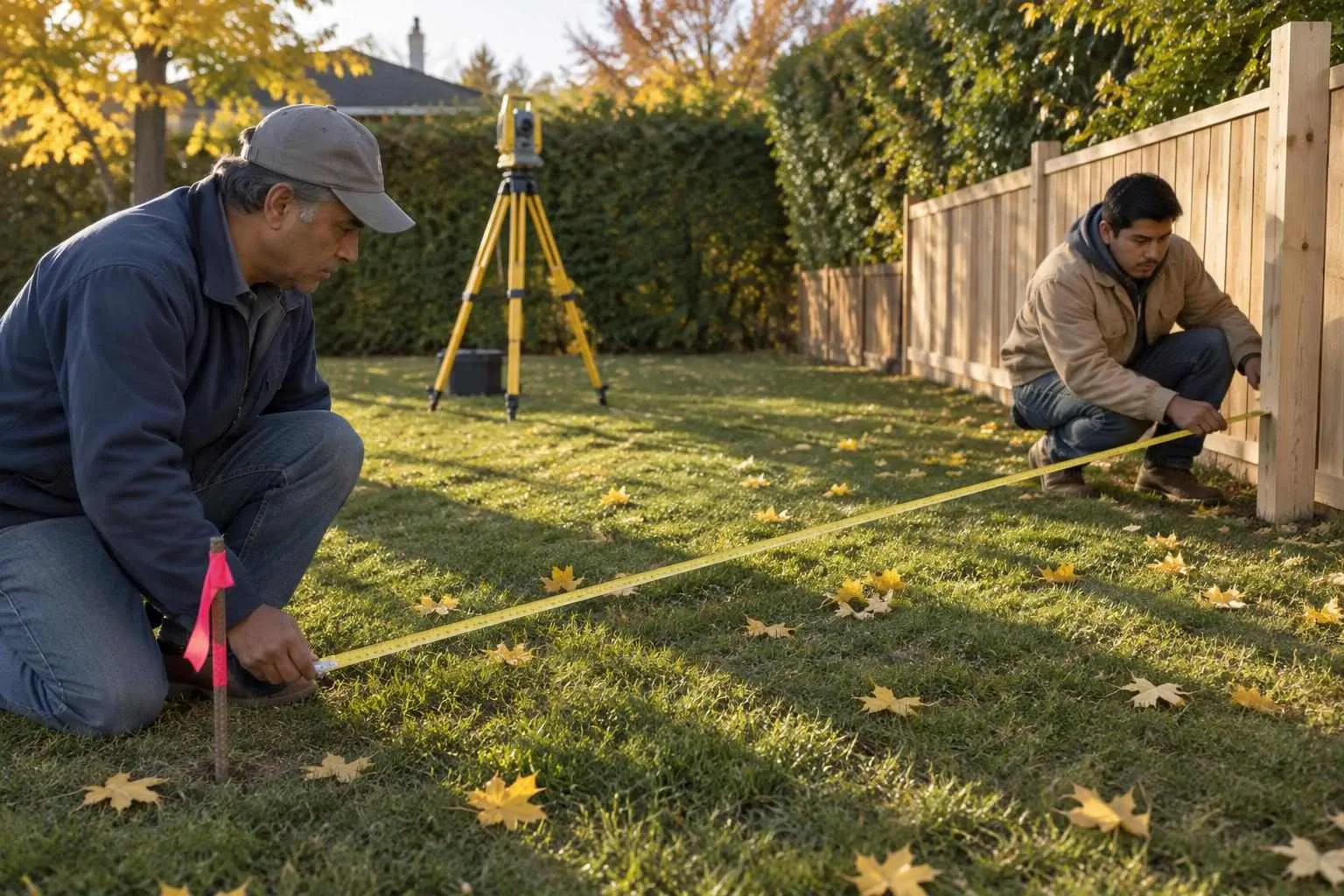
- Operate GPS/drone equipment
- Take measurements and collect raw data
- Set temporary stakes in the field
- Create field notes and preliminary sketches
- Support the licensed surveyor’s analysis
Here’s the thing nobody says out loud: Measuring is not surveying. A drone, a GPS unit, even Google Earth will give you coordinates. But determining whether those coordinates represent a legal boundary? That requires professional judgment, experience, and legal liability insurance. Only an LLS has that authority.
Reality Check:I’ve seen unlicensed “surveyors” misuse tools like Google Earth or cheap online databases to determine boundaries, then hand the client a drawing. The client assumes it’s final. It’s not. It has no legal standing. When the title company or the neighbor’s attorney looks at it, it gets rejected, and the client is out $500-$800 with zero recourse because the person who created it had no credibility or insurance.
When You Absolutely Need a Licensed Land Surveyor
Stop here if you’re in any of these situations:
- Any real estate transaction — Purchase, refinance, divorce settlement, boundary dispute. Title companies require an LLS-signed survey. Period.
- Property boundary questions — Neighbor disputes, encroachment issues, fence placement, or checking if a structure is on your property.
- Legal descriptions or deeds — If a document needs to describe land legally, an LLS has to prepare or verify it.
- Subdivision or development work — Platting, creating new lots, or recording surveys with the county. State law requires LLS authority.
- Construction staking for permitted work — Building permits often mandate LLS oversight to ensure structures are placed legally.
- ALTA/NSPS surveys — Lenders and title companies require these for commercial transactions. Only an LLS can certify them.
Pro Tip:Bring in the LLS early, not at the end. If you’re in a development or real estate deal, get the Licensed Land Surveyor involved during planning, not after you’ve already made decisions based on preliminary measurements. Early involvement prevents expensive revisions later.
The Cost Reality
Nobody gives you a clean pricing table for surveys — rates vary by region, project complexity, and whether you’re hiring a solo LLS or a larger firm. A simple residential boundary survey runs $500–$1,500. Complex commercial or ALTA work? $5,000+.
But here’s what impacts the cost:
Unlicensed assistants under LLS supervision are cheaper upfront. The LLS doesn’t have to be on-site for every field visit, so the firm can assign a technician to collect data, then the LLS reviews and certifies the work. This reduces labor costs.
However — and this is critical — you can’t skip the LLS phase to save money. If someone tries to sell you a “full survey” for $300, they’re cutting corners somewhere. Either the LLS isn’t doing a full analysis, or the person you hired isn’t actually licensed.
Operating without licensure creates unlimited liability. An unlicensed surveyor running their own business has no firm structure, no professional insurance, no regulatory oversight. If their boundary determination is wrong and causes a property dispute, they can be sued personally for unlimited damages. A licensed firm, by contrast, has professional liability insurance and is bound by state regulations.
The Confusion Everyone Has (and How to Clear It Up)
Question: “Can’t I just hire an unlicensed surveyor to save money?”
Answer: Not if you need legal certainty. An unlicensed surveyor can collect field data, but title companies, attorneys, and municipalities won’t accept it for transactions or permits. You’d end up paying twice — once for the unlicensed work, again for an LLS to do it properly. For a $200 savings upfront, you’ll spend $800 fixing it later.
Question: “What if I hire a surveying firm? Do they have licensed surveyors?”
Answer: By law, they must. Survey firms in California (and every state) are required to have at least one Licensed Land Surveyor in responsible charge. Out-of-state firms opening a branch need a licensed owner, partner, or officer physically present regularly. This is enforced. If a firm can’t show an active LLS, it’s operating illegally.
Question: “Does a Licensed Land Surveyor do all the fieldwork themselves?”
Answer: Not always. Larger firms use teams: an LLS supervises, an assistant or technician operates equipment in the field. The LLS reviews the data, performs the legal analysis, and signs the final document. The fieldwork is part of the process, but the LLS’s signature is the guarantee of accuracy and legal standing.
Practical Bottom Line
If you’re buying property, refinancing, or settling a boundary dispute: hire a Licensed Land Surveyor. Not a surveying technician. Not a contractor who “also does surveys.” An actual LLS with credentials, a state license number, and professional liability insurance.
Cost between $500–$5,000 depending on complexity. Yes, that’s money. It’s also money that prevents you from buying a house with a boundary problem, or settling a neighbor dispute that turns into litigation.
Get a written quote upfront. Ask which licensed surveyor will be signing the final document. Ask about timeline. Ask what’s included (field survey, office analysis, final signed document). Don’t go by price alone — you’re buying professional judgment and legal liability coverage.
Start here: If you’re in a transaction, ask your title company which LLS they prefer or require. If it’s a boundary dispute, talk to a real estate attorney — they’ll tell you who to call. Don’t start with Google’s first result.
For a deeper dive into how surveys work and when you need different types, check out our complete guide to land surveyors. And if you’re navigating a specific situation — development work, ALTA surveys, or residential boundary questions — we’ve got dedicated guides on each.
The bottom line? You don’t need to choose between a surveyor and a licensed one. You need the licensed one. The credential isn’t optional — it’s the only thing that makes the survey legally defensible.
Done reading? Get quotes from land surveyors near you.
Takes about a minute. Free, no obligation; providers reply to you directly.
Popular cities: