What would your job cost? Get quotes from land surveying services providers near you
Takes about a minute. Free, no obligation; providers reply to you directly.
I got the phone call at 3 PM on a Friday: “We need a survey done Monday morning for closing.” My client was ready to wire $2,000 sight unseen, assuming that’s what land surveys cost everywhere. Turns out, if they’d called a surveyor in rural Arkansas instead of downtown Los Angeles, they would’ve saved nearly 60% of that bill. Same work, same professionalism, wildly different price tag.
That’s when I realized land surveyor costs aren’t some fixed, universal thing — they’re a regional kaleidoscope shaped by cost of living, competition, terrain, and simple geography.
The Short Version:A basic boundary survey costs $375–$745 nationally, but can reach $1,400–$6,000 in high-cost states. Where you live determines price more than anything else. For commercial ALTA/NSPS surveys, budget $1,000–$3,000, with northeastern and western states pushing toward the higher end.
Key Takeaways
- National average for a basic boundary survey: $525, but ranges from $375–$745 depending on location and property size
- State-level costs vary dramatically: California and New York surveys run 40–50% higher than states like Arkansas and Mississippi
- Cost of living directly correlates with surveyor pricing — states with 30% higher living costs charge proportionally higher fees
- The real value play isn’t finding the cheapest surveyor — it’s understanding what drives costs in your region and negotiating accordingly
Where Geography Hits Your Budget
Let me lay this out bluntly: the state you’re in matters more than the surveyor you hire.
Here’s what surveyors charge across major markets:
| State/Region | Typical Boundary Survey Range | ALTA/Commercial Survey Range |
|---|---|---|
| Arkansas, Mississippi, Oklahoma | $400–$1,200 | $800–$2,000 |
| Ohio, Florida | $800–$3,800 | $1,500–$4,000 |
| Texas | $1,100–$4,200 | $1,800–$5,000 |
| California | $1,200–$5,600 | $2,500–$6,500 |
| New York | $1,400–$6,000 | $2,800–$7,000 |
Look at that gap. A boundary survey in Manhattan runs 3x what it costs in rural Mississippi. That’s not because New York surveyors are three times better — it’s because they’re operating in a market where rent, labor, insurance, and equipment cost substantially more.
California’s a perfect case study. Southern California urban zones (Los Angeles, San Diego) run $950–$1,800 for basic surveys. Move to a less densely populated area, and you might drop to $650–$1,500. But compare that to Arkansas or Mississippi, where you’re looking at $400–$1,200 total, and the math gets painful fast.
Why Costs Differ: The Unsexy Answer Is Cost of Living
Nobody wants to hear this, but it’s almost entirely about cost of living adjustments.
The Regional Price Parity (RPP) index measures how much more or less goods and services cost in different states compared to the national average. Here’s the 2024 breakdown:
Most expensive states:
- California: 110.7 (costs ~30% more than the cheapest states)
- Hawaii: 110.0
- District of Columbia: 109.9
- New Jersey: 108.8
Least expensive states:
- Arkansas: 86.9
- Mississippi: 87.0
- Iowa: 87.8
- Oklahoma: 87.8
Land surveyors price their work based on what it actually costs them to operate. A two-person crew in New York has higher payroll, vehicle insurance, office rent, licensing fees, and equipment maintenance than one in Tulsa. Those costs don’t disappear — they get passed to you.
Reality Check:You can’t negotiate a surveyor down to “the price in Arkansas” if you’re in California. They’re working in different economic realities. What you can do is understand that regional premium and make sure you’re paying for scope of work, not just location tax.
What Actually Drives Your Specific Quote
Beyond geography, surveyors factor in five concrete things:
1. Property size and complexity — A half-acre with clean deed history: $375–$745. A 40-acre parcel with unclear boundaries? $4,000–$12,000. That’s field time, research time, and liability.
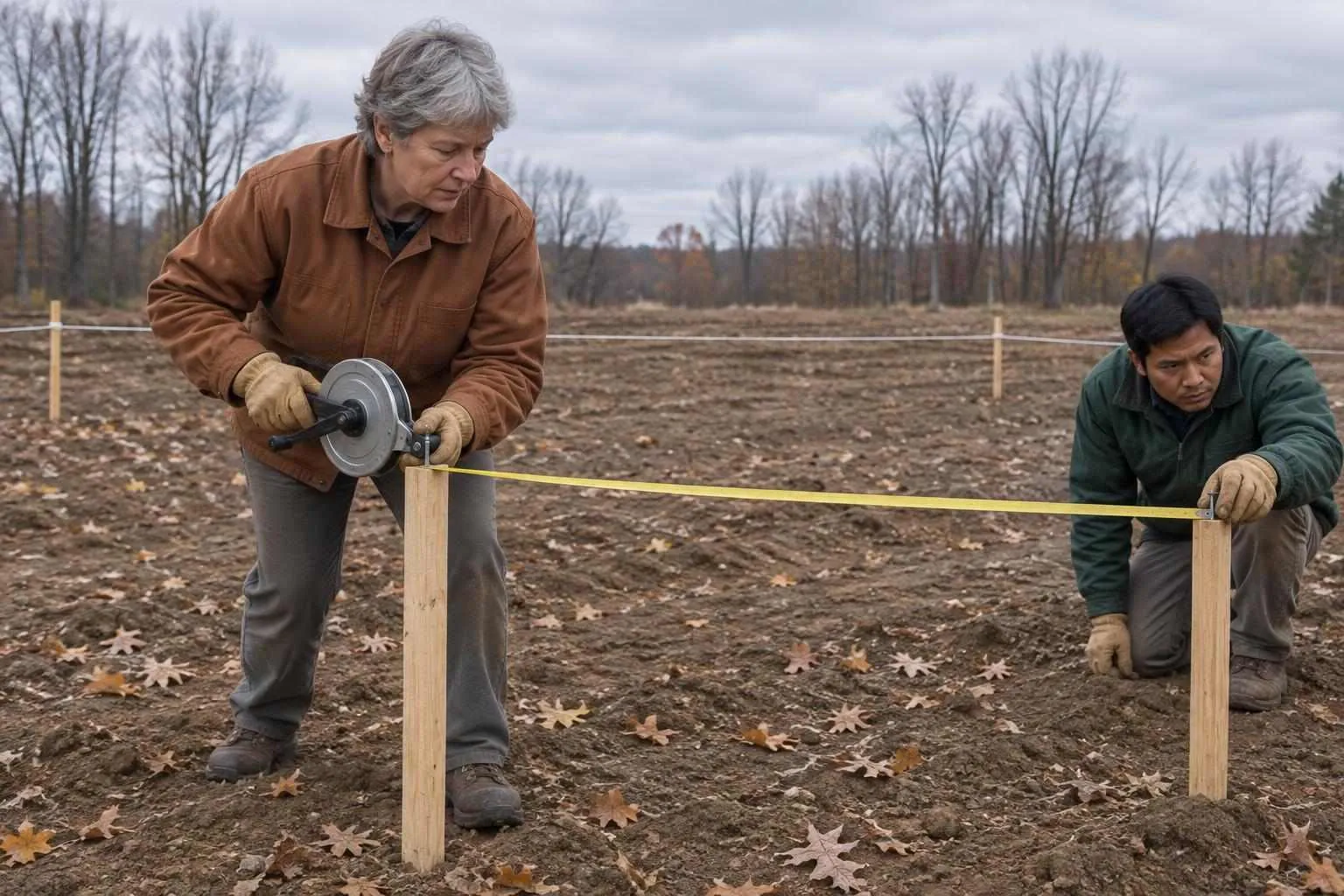
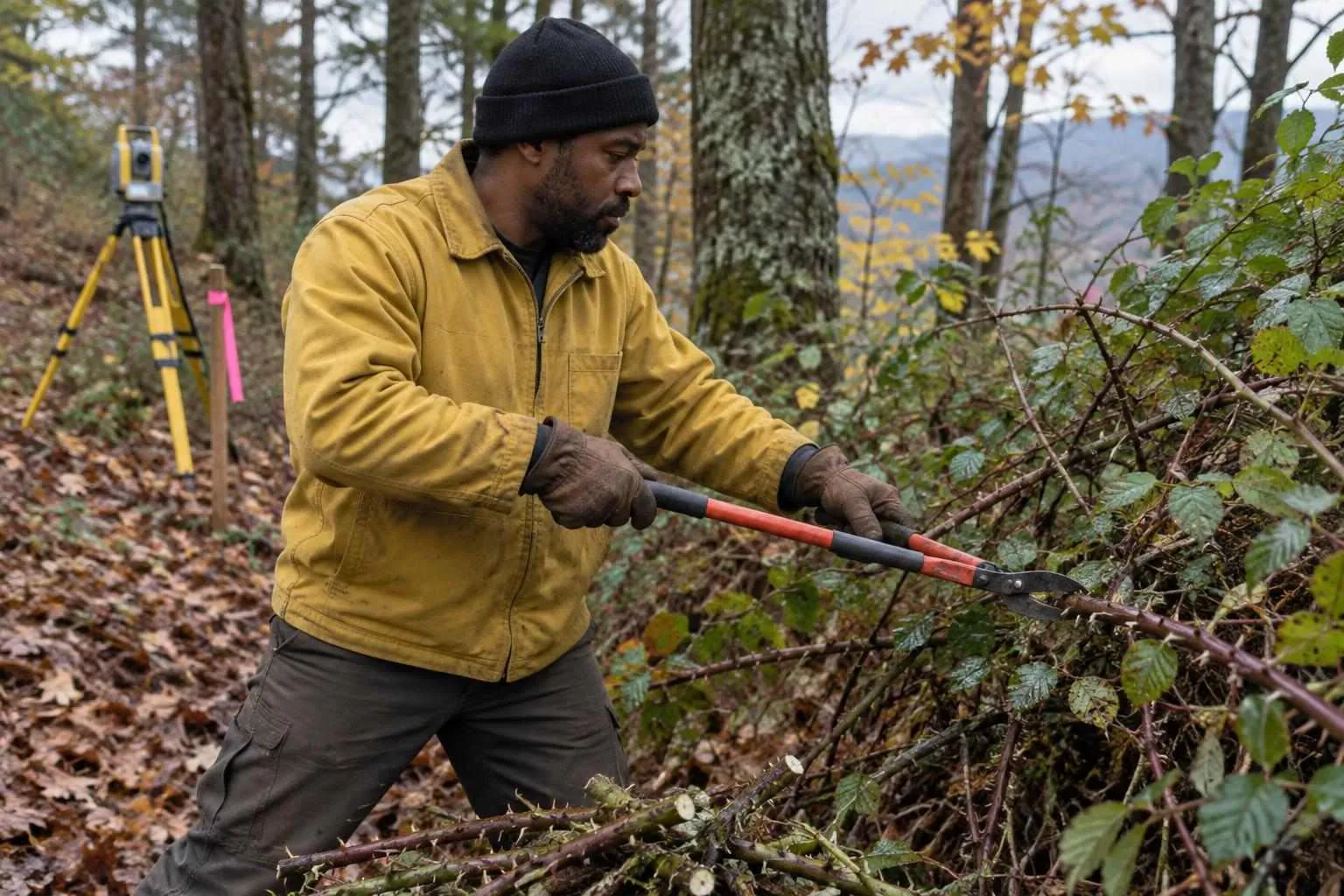
2. Terrain difficulty — Flat, accessible suburban lots cost less. Steep slopes, dense vegetation, swamps, or properties in the middle of nowhere add $100+ per 10,000 square feet. The surveyor’s crew has to spend more time out there.
3. Title and deed research — A straightforward boundary check is straightforward. Missing prior surveys, conflicting descriptions, or historical title issues mean legal research at $85–$160 per hour. That compounds fast.
4. Survey type — A basic boundary survey is $400–$700. A comprehensive ALTA/NSPS survey (the commercial gold standard) is $1,000–$3,000. Topographic surveys run $500–$1,200. As-built surveys for construction: $800–$1,200. You’re not just paying for the stakes in the ground — you’re paying for the level of certification and detail.
5. Surveyor availability — In dense urban markets, competition keeps some prices down. In rural areas or regions with few licensed surveyors, scarcity drives prices up.
The takeaway: every quote should itemize what you’re actually getting. If two surveyors give you wildly different numbers, the cheaper one might be doing less work, or the expensive one might be over-scoping.
Pro Tip:Don’t shop for the cheapest survey — shop for the right survey. A $400 boundary survey won’t work for a commercial ALTA transaction. A $2,500 ALTA survey is overkill for a fence dispute. Get a quote that matches your actual need, then compare apples to apples. That’s where you find real value.
The Hourly Breakdown (For Context)
If your surveyor quotes hourly work (title research, staking, revision surveys), know the labor benchmarks:
- Principal surveyor: $130–$220+ per hour (varies by state and seniority)
- Two-person crew: $140–$160+ per hour
- Property record research: $85–$160 per hour
- Senior surveyors in high-cost markets: can push $220–$450 per hour
Shorter projects often hit a minimum fee ($200–$500) even if the math would suggest lower cost. That’s not price gouging — that’s the surveyor’s minimum trip charge to show up.
The Geographic Arbitrage Trap (And Why It Doesn’t Work)
You might be thinking: “What if I hire a surveyor from Mississippi to do work in New York?” Don’t. Every state licenses surveyors separately, and each licensee seals their own deliverable. A Mississippi surveyor can’t legally sign off on a New York boundary survey — only a licensed New York surveyor can. The geographic premium exists because it’s legally required.
The only arbitrage that sometimes works is hiring a local surveyor earlier in the process (during due diligence) at a lower scope level, then moving to your state’s licensed surveyor later. But that’s dealing with timing, not geography.
Practical Bottom Line
If you’re shopping for land surveyor costs:
-
Get 2–3 quotes from licensed surveyors in your state. Regional differences are real, but they’re not negotiable — they’re structural.
-
Specify exactly what you need. “Survey the property” is too vague. Are you looking boundary confirmation, ALTA-level documentation, or just staking? The answer changes the price by thousands.
-
Ask what’s included. Does the quote cover deed research? Title review? Digital files? Print copies? These add up.
-
Don’t use price alone as a tiebreaker. Once you’re in the same ballpark (say, $800–$1,200 for a straightforward residential boundary in your area), pick based on availability, turnaround time, and whether they seem to actually understand your project.
-
Budget for your state’s premium. If you’re in California, New York, or the Northeast, plan for costs 40–50% higher than the national average. If you’re in the South or Midwest, you’re likely in a better position — but don’t assume cheap automatically means good.
For more on what surveyors actually do and when you need them, read The Complete Guide to Land Surveyors. It covers the full scope and helps you figure out if you even need a survey before you start shopping.
The hard truth: You can’t negotiate geography. But you can be smart about scope, timing, and expectations. That’s where the real savings live.
Done reading? Get quotes from land surveyors near you.
Takes about a minute. Free, no obligation; providers reply to you directly.
Popular cities: