Are you a land surveyor?
SurveySlate lists 558 land surveyors. A free listing gives you a profile page and quote requests from people looking for land surveying services near you, sent straight to your inbox.
I spent six months helping a real estate attorney prepare a boundary dispute case. The surveyor’s report was dated three years old—field conditions had changed, property lines had shifted slightly due to erosion, and the equipment used was considered obsolete by 2024 standards. The attorney had to hire a new surveyor just to validate the findings. It cost her client an extra $3,500 and two months of delay.
That conversation stuck with me. I realized I had no idea how the surveying industry actually worked—who was doing the work, what technologies were changing the game, or whether the profession was growing or shrinking.
So I dug into the numbers. Here’s what the data actually shows about land surveying in 2026.
The Short Version:The land surveying services market hit $694.86 million in 2026, growing at 3.8% annually toward $968.47 million by 2035. North America dominates with 38.7% of the global market, but Asia-Pacific is where the real growth is happening. Drone surveys jumped 28% year-over-year in 2023 and keep accelerating. If you’re hiring a surveyor or thinking about the industry, precision equipment and digital services are the competitive moat now.
Key Takeaways
- Market Size: Land surveying services reached $694.86M in 2026, up from $644.91M in 2024
- Regional Dominance: North America controls 38.7% of services revenue ($250M), but Asia-Pacific is the fastest-growing region
- Tech Shift: Drone surveys grew 28% YoY; robotic systems and laser scanning now account for 22% of equipment usage
- Revenue Trajectory: Services segment projected to grow at 3.8% CAGR through 2035, with the broader surveying market expected to reach $15.3B by 2032
The Bigger Picture Nobody Talks About
Here’s what most people miss: the land surveying industry isn’t just about boundary lines anymore. It’s embedded in the infrastructure boom happening right now.
The broader land surveying market—which includes equipment, software, consulting, and specialized services—hit $9.7 billion in 2024 and is projected to reach $15.3 billion by 2032 at a 5.9% compound annual growth rate. That’s driven by highways, railways, smart cities, and massive urbanization waves, especially in India and China.
But here’s the kicker: the services segment is growing faster than the hardware market.
Services (calibration, data processing, cloud hosting, drone operations) are projected to hit $3.06 billion by 2031, growing at 10.55% CAGR. That’s more than double the growth rate of the equipment side. Translation: the industry is shifting from “buy expensive gear and depreciate it” to “pay for expertise, data analysis, and technology integration.”
Reality Check:If you’re pricing surveying work like it’s 2018—based purely on equipment costs and field hours—you’re leaving money on the table. Clients now expect integrated digital workflows, cloud data storage, and automated analysis. Your value isn’t the total station anymore. It’s what you do with the data.
Market Size Breakdown: Where the Money Is
| Metric | 2024-2026 | 2031-2035 | CAGR |
|---|---|---|---|
| Services Revenue | $644.91M → $694.86M | $968.47M | 3.8% |
| Hardware Equipment | $8.7B (2026) | $13.2B (2036) | 4.2% |
| Services Segment (Projected) | N/A | $3.06B (2031) | 10.55% |
| Broader Surveying Market | $9.7B (2024) | $15.3B (2032) | 5.9% |
North America’s $250 million services market in 2026 is the largest regional pocket, but don’t let that fool you. Asia-Pacific is 20% of the services market now and growing faster. Europe holds 25%, Middle East & Africa 15%—and MEA is the fastest-growing region at this moment.
What’s Actually Changing in the Field
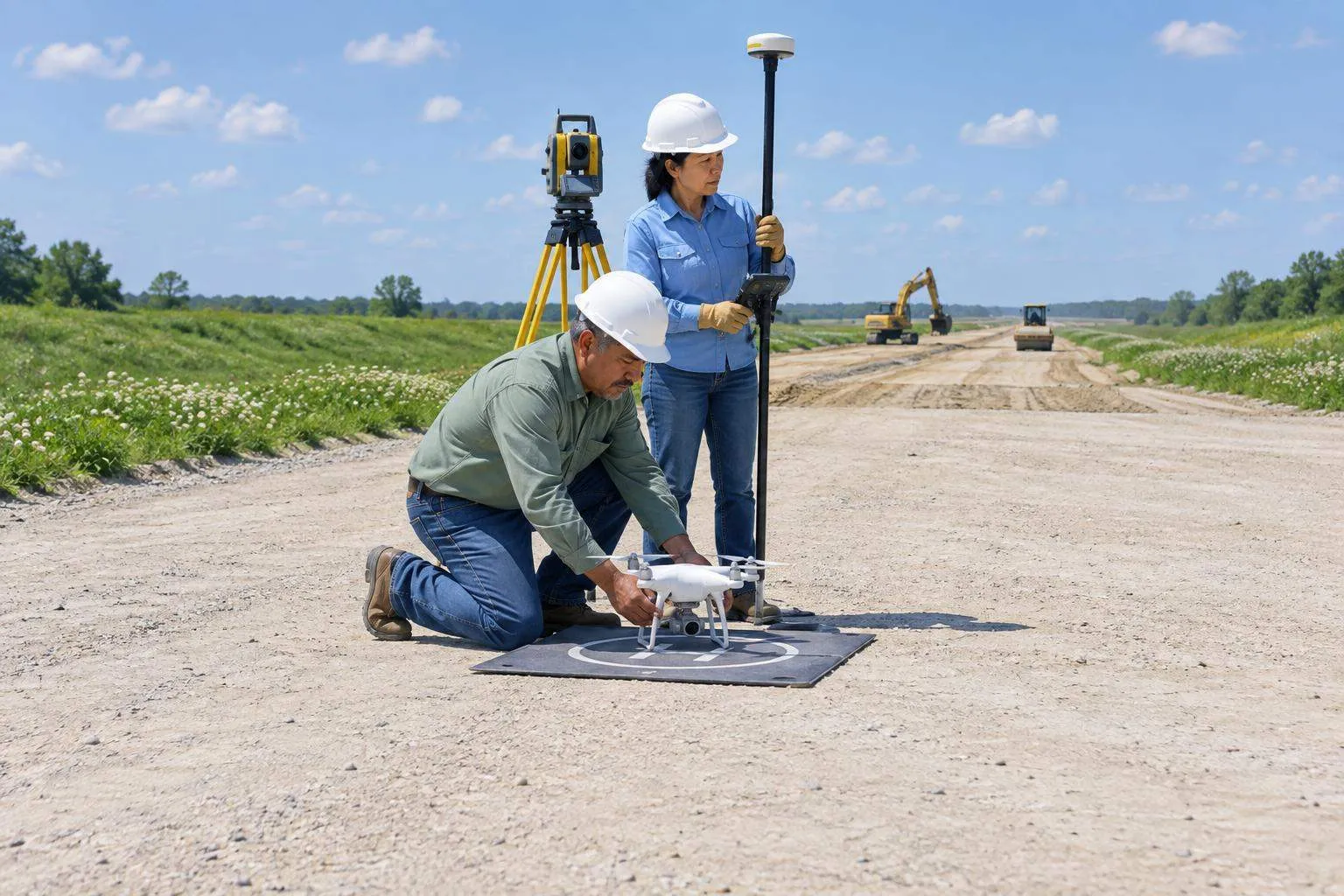
Drone surveys: Up 28% year-over-year in 2023, and the growth hasn’t slowed. Why? They’re cheaper, faster, and safer for difficult terrain. A drone can map a 500-acre construction site in hours instead of days.
Equipment adoption is shifting hard:
- Total stations still lead with 38.4% market share (they’re reliable, proven)
- But the real movement is toward laser scanning (14.7% share) and robotic systems (7.2%)
- Combined, electronic, laser, and robotic equipment now account for 57.7% of equipment deployed
That’s not a marginal shift. That’s an inflection point.
Pro Tip:If you’re running a surveying firm and your crews are still using purely optical instruments, you’re at a competitive disadvantage. The hardware replacement cycle for total stations is 8-10 years. If your fleet is over five years old, clients with tight timelines are going to hire someone with GPS-integrated or robotic systems instead. It’s not about having the fanciest gear—it’s about matching your equipment to the job type.
Regional Reality: Where Surveyors Are Actually Busy
The numbers break down like this:
North America (38.7% of services): Still the largest market. Regulatory requirements for ALTA/NSPS surveys, public/private infrastructure projects, and mature real estate markets keep work steady. Growth rate: 4.1% CAGR.
Asia-Pacific (20% and climbing): Urbanization in India, China, Southeast Asia is the driver. Highway construction, railroad projects, new city development. This is where the fastest growth is happening, and it’s going to stay that way for the next decade.
Europe (25%): Mature market, slower growth, but stable. Urban regeneration projects and sustainability-focused development are keeping demand consistent.
Middle East & Africa (15%, fastest-growing region): Infrastructure and oil/gas exploration. Not as large as other regions, but growing at the most aggressive rate. If you can work internationally, this is where the opportunity is expanding fastest.
Latin America: Emerging. Resource exploration and infrastructure investments are starting to move the needle.
The Equipment Market: Replacement Cycles and Growth
The land survey equipment market alone hit $8.7 billion in 2026 and is heading to $13.2 billion by 2036. That’s a 4.2% CAGR over a decade—steady, predictable growth tied to:
- Hardware replacement cycles (total stations, GNSS receivers, laser scanners don’t last forever)
- Adoption of new tech (drones, robotic systems, AI-powered data processing)
- Regional infrastructure expansion
One alternative estimate puts the market at $9.7 billion in 2026, growing to $12.47 billion by 2031 at 5.17% CAGR, with the hardware segment specifically at $5.51 billion (59.7% of total).
That’s not a typo—there are genuinely different methodologies for sizing this market. But all of them point in the same direction: consistent, mid-single-digit growth.
Nobody’s getting rich quick here. But surveyors with solid equipment and digital workflow integration are doing steady business.
What the Data Reveals (and What It Hides)
The surveying industry is growing, but not explosively. It’s infrastructure-tied, which means it moves with government spending, real estate cycles, and development booms. That’s boring data until you zoom into specific regions.
The fascinating part: services are outpacing equipment sales. That means the industry is maturing. It’s moving from a “capital equipment” business (buy a total station, use it for ten years) to a “service and integration” business (continuous software updates, cloud platforms, data analysis, liability management).
Reality Check:If you’re a surveying firm competing purely on field work rates, you’re fighting a race to the bottom. The firms winning right now are the ones offering integrated services—cloud storage, automated analysis, real-time collaboration platforms, drone operations and traditional surveys bundled together.
Practical Bottom Line
If you’re hiring a surveyor for a property transaction, expect to pay $500–$5,000 depending on complexity. If you’re running a surveying business, the next 3–5 years are about upgrading your equipment to electronic/laser/robotic systems and building out service offerings around data processing and analysis. If you’re an investor, the surveying industry isn’t a growth story—it’s a steady, infrastructure-linked business with real demand and consolidation happening at the margins.
The bigger insight: surveying is becoming infrastructure-grade technology. It’s not glamorous, but it’s essential. And the firms that combine traditional precision work with modern digital workflows are going to own the next decade.
For more context on how surveyors operate and why they matter, check out our complete guide to land surveyors.
Done reading? Get quotes from land surveyors near you.
Takes about a minute. Free, no obligation; providers reply to you directly.
Popular cities: