Get free quotes from land surveying services near you
Takes about a minute. Free, no obligation; providers reply to you directly.
I walked into a closing meeting expecting a rubber stamp. The title company pulled the survey, frowned, and asked why the property line didn’t match the legal description. The surveyor had measured everything correctly—but hadn’t cross-checked the deed against tax records. Forty minutes later, we were negotiating a correction addendum. A five-minute verification step could’ve prevented it.
That’s when I realized: most people treat survey deliverables like they treat software updates. You assume it’s fine unless something breaks. But a surveyor’s work sits at the foundation of real estate transactions, development projects, and boundary disputes. If you’re not checking it, you’re betting money on luck.
The Short Version:Before accepting any survey, verify the surveyor’s credentials and equipment calibration, cross-check property measurements against legal documents and tax records, confirm field documentation with photos and station descriptions, and review the final plan for technical accuracy and standards compliance. If anything doesn’t match the deed or looks incomplete, request corrections before closing.
Key Takeaways
- Missing a single calibration record or incomplete field notes can invalidate an entire survey in legal proceedings
- Boundary surveys fail most often when deeds aren’t cross-checked against measurements (it happens more than you’d think)
- A structured review checklist prevents the kind of back-and-forth that costs weeks and thousands in delays
- You don’t need to be a surveyor to catch red flags—you just need a system
Why Your Gut Isn’t Enough
Here’s what the industry doesn’t advertise: there’s no comprehensive, standardized reporting on survey errors or how often reviews catch problems. Most firms operate with internal QC processes that vary wildly depending on who hired them and what state they’re in. Some surveys get a thorough three-part check (control verification, topographic accuracy, field confirmation). Others get whatever the project manager had time for on Friday afternoon.
The real issue isn’t that surveyors are sloppy. Licensed surveyors are professionals who stake their reputation on every deliverable they sign and seal. The problem is that oversight standards depend entirely on who’s paying attention—and if you’re not, nobody is.
Reality Check:One municipal guideline framework identified six critical failure points across survey projects: lack of standardized processes, missing contractor involvement early on, poor progress tracking, incomplete site investigation, weak review procedures, and inadequate training. Every single one of these is preventable with a checklist.
The Core Checklist: What You’re Actually Looking For
1. Personnel & Credentials (Pre-Work Verification)
Before the surveyor ever sets foot on your property, verify:
- License is current and active in your state
- Professional liability insurance is in force (ask for proof)
- Personnel assigned to the work have documented training and experience records
- The project includes a written quality control plan signed before fieldwork begins
This isn’t paranoia. It’s the equivalent of checking that a contractor is bonded before they touch your roof.
Pro Tip:Request the surveyor’s ITP (Inspection and Test Plan) document. This shows exactly how they’ll execute the work, what they’ll document, and when they’ll do QC reviews. If they hand-wave this, that’s your signal to dig deeper.
2. Equipment & Calibration (Your First Red Flag)
Surveyors use GPS units, total stations, and optical equipment. All of it needs to be calibrated. Here’s what to verify:
| Item | Acceptable Standard | Red Flag |
|---|---|---|
| Equipment calibration records | Valid, dated within manufacturer’s interval (usually annually) | Missing, expired, or “calibrated in-house” without third-party verification |
| Control/maintenance logs | Records of authorized personnel performing maintenance | No documentation or handwritten notes without dates |
| Accuracy checks | Field verification that equipment meets stated specifications | No test results provided |
| Equipment manuals | Current manuals on file and referenced in QC | Outdated versions or no manuals |
Missing a single calibration record doesn’t automatically invalidate the work—but it creates a legal vulnerability. If the survey ends up in court, that gap becomes ammunition.
3. Field Documentation (The Paper Trail)
This is where most reviews fall apart. Surveyors are supposed to document everything. In reality, you’re checking that they actually did.
Look for:
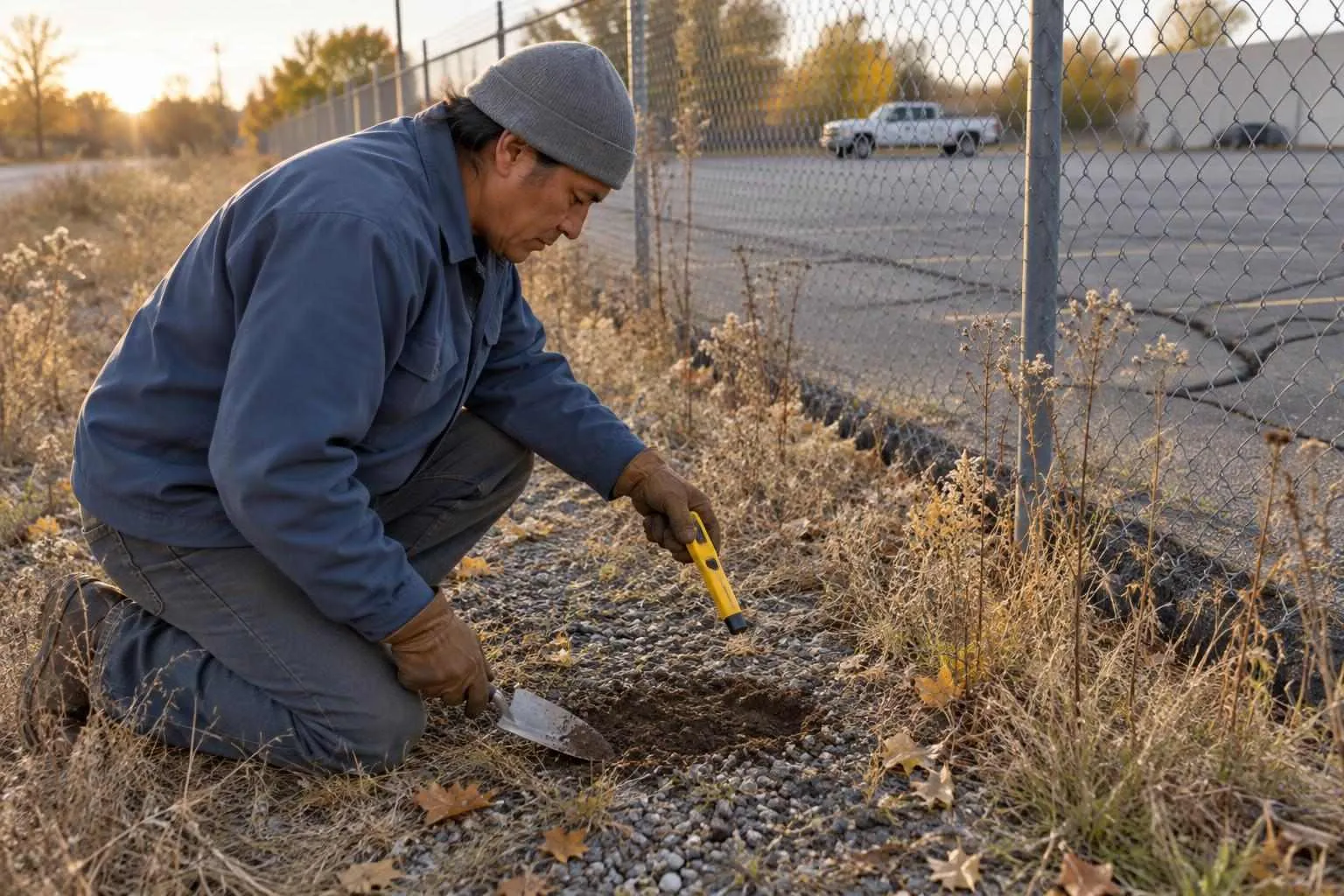
- Station descriptions & rubbings: Digital photos of control points from both wide and close-up angles, plus pencil rubbings of physical monuments (this confirms they actually visited the site and what they found there)
- Weather & condition notes: Evidence that fieldwork happened under acceptable conditions
- Closure reports: Numerical accuracy of control ties (typically 1:5000 or better for legal surveys, depending on state standards)
- Daily QA reviews: Notation that senior staff reviewed work as it happened, not after the fact
Reality Check:One multi-site survey standard required digital photos and summary reports for at least 3 properties per site. It sounds excessive until you realize photos are the only proof that fieldwork actually happened correctly.
The Property-Specific Review: Don’t Skip This
For Boundary Surveys
This is where my earlier example came from. Before you sign off, manually verify:
| Check | What to Do | Why It Matters |
|---|---|---|
| Deed match | Print the legal description from the deed. Read it word-for-word alongside the survey plan. Do the measurements, bearings, and call-outs align? | Surveyors sometimes interpret historical language differently. Catching discrepancies here saves the closing. |
| Tax records & acreage | Pull assessor data for the property. Does the surveyed square footage match the tax record? Are there discrepancies? | Mismatches suggest either old tax data or field measurement problems. Either way, you need to know before closing. |
| Encroachments & improvements | Does the survey note fences, sheds, driveways, or structures that cross property lines? | Missing encroachment notation is how boundary disputes happen after purchase. |
| Contiguity | If surveying multiple parcels, confirm they actually connect as expected. | Subdivisions sometimes have gaps or overlaps in old records. |
For ALTA/NSPS Surveys (Title Surveys)
These are the gold standard for commercial and residential transactions. They’re also dense. Spot-check:
- Control tie with scale factor: Bearings expressed in degrees/minutes/seconds (not decimals), with proper scale factor notation
- Two control markers referenced: The survey should tie to at least 2 identifiable control points
- Closure accuracy: The final calculation should close to acceptable tolerance
- Standards compliance: Current ALTA/NSPS standards (versions change; older surveys might not meet current requirements)
- Legal description match: The title commitment description should match the survey plan exactly
Pro Tip:If you’re reviewing an ALTA survey for a commercial transaction, ask the surveyor directly: “Does this survey meet current ALTA/NSPS 2021 standards?” (or whatever the latest version is). Don’t assume. One outdated standard can slow down title insurance approval.
The Red Flags That Mean “Request Corrections”
Stop here and ask for re-work if you see:
- Missing or incomplete field photos — Especially at control points or where measurements seem odd
- Closure report missing or vague — “Acceptable” isn’t good enough. You need the actual accuracy ratio
- Deed and survey don’t match, with no explanation — If the surveyor found a discrepancy, it should be noted in writing, not buried or ignored
- Equipment calibration records missing — This creates legal liability, even if the work looks fine
- Station descriptions that say “found monument, condition unknown” — If they didn’t verify the monument’s condition, the control point is suspect
- Plan that doesn’t include all visible structures — Outbuildings, pools, decks matter. Omissions look like carelessness
- No evidence of QC review — Look for initials, dates, or notes showing someone else checked the work
Practical Bottom Line
You don’t need to become a surveyor. You just need a system.
Before accepting any deliverable:
- Verify personnel credentials and calibration records are current and documented
- Cross-check the survey against the original deed and tax records—manually
- Request digital photos of all control points and field conditions
- Review the closure report; if it says “acceptable,” ask for the actual accuracy ratio
- For boundary surveys, specifically verify that encroachments and structures are noted
- If anything doesn’t match or looks incomplete, request corrections in writing before the transaction closes
The surveyor won’t mind. Good ones expect this level of review and have it built into their timeline. If they push back or get defensive, that’s your second red flag.
Learn more about what surveyors actually do in The Complete Guide to Land Surveyors, and dig deeper into boundary disputes and how to prevent them—the checklist saves money, but understanding the process saves headaches.
Done reading? Get quotes from land surveyors near you.
Takes about a minute. Free, no obligation; providers reply to you directly.
Popular cities: